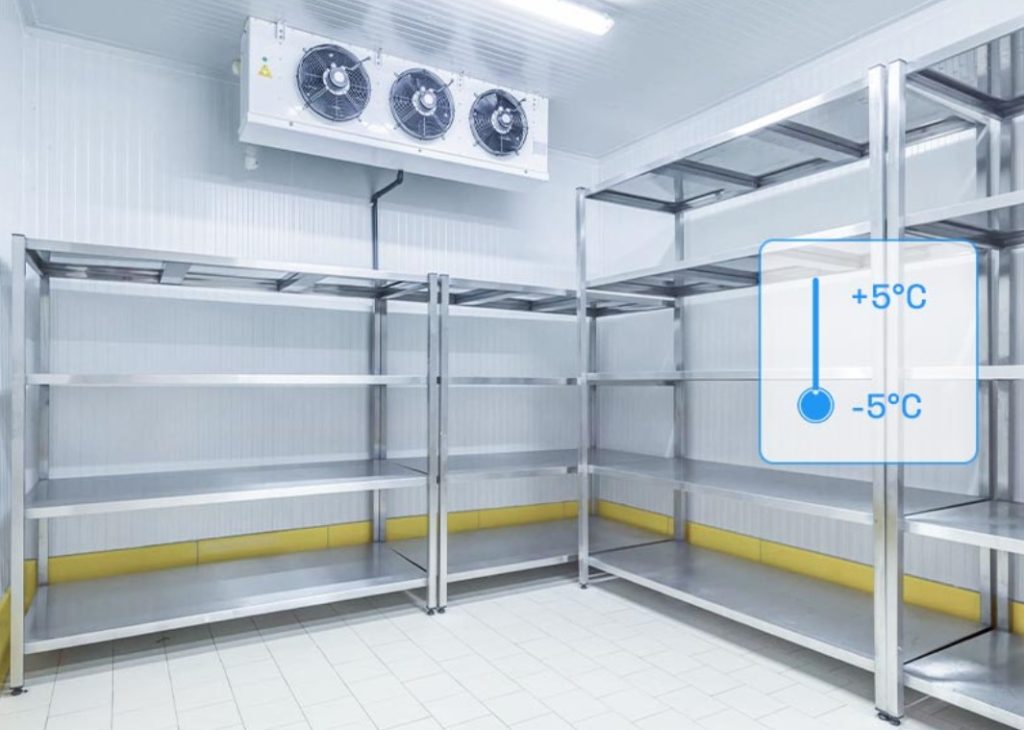
Designing a cold room isn’t just about making a space cold — it’s about ensuring consistent temperature, efficient energy use, and long-term protection of your products. In Singapore’s humid climate and space-limited commercial environments, selecting the right cooling capacity and storage volume is key to running a safe and cost-effective operation.
Whether you’re in F&B, logistics, pharmaceuticals, supermarkets, hotels, or require a residential/commercial wine cellar, this guide will help you determine the ideal cold room capacity for your needs.
- Understand What You’re Storing
Different products require different storage conditions.
| Product Type | Typical Storage Temperature | Considerations |
| Fresh Produce | +2°C to +8°C | High humidity to avoid dehydration |
| Meat & Poultry | -18°C and below | Fast chilling/freezing capacity needed |
| Dairy & Bakery | +2°C to +5°C | High stock turnover |
| Seafood | -20°C to -28°C | Strict temperature consistency |
| Vaccines/Pharma | +2°C to +8°C / -20°C | Regulatory compliance |
| Wine Storage | +12°C to +18°C | Strict humidity + vibration control |
Incorrect sizing = unstable temperatures → product spoilage → financial loss.
- Calculate Storage Volume Properly
Cold room size must match both current needs and future growth.
Ask yourself:
- How many pallets, cartons, or bottles are stored daily?
- How often will stock be replenished?
- Do you need space for employees to move inside?
A good rule: Only 60–75% of the internal volume should be used for storage to allow proper airflow.
Tip: We design modular cold rooms optimized for Singapore’s compact retail kitchens and storage areas — maximizing usable space without compromising cooling efficiency.
- Consider Heat Load Factors
Cooling capacity isn’t determined by room size alone. These factors add heat to the room:
- Door openings & foot traffic
- Fresh vs. pre-chilled goods
- Lighting heat emission
- Refrigeration equipment location (indoor vs. outdoor)
- Insulation thickness & panel material
- Ambient Singapore temperature (32°C+ outdoors)
Improper heat load calculation leads to:
– Compressor overworking
– Excessive energy bills
– Reduced equipment lifespan
We use accurate heat load calculations to ensure the system runs efficiently in local climate conditions.
- Plan for Operational Workflow
Ask:
- How frequently are goods accessed?
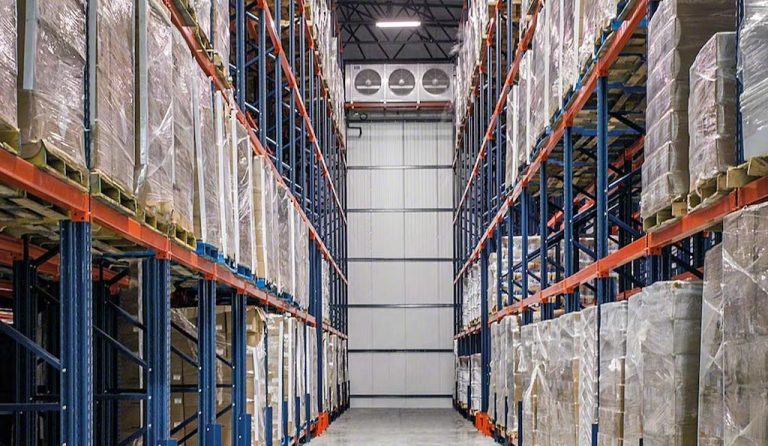
- Do you need shelving, pallet racking, or blast freezing?
- Will storage expand during festive seasons or business growth?
We typically recommend modular cold rooms so expansions can be done easily later.
- Factor in Compliance & Safety
In Singapore, food storage must comply with:
- SFA food safety requirements
- NEA & BCA building and mechanical ventilation guidelines
Wine cellars must also control:
- Humidity (50–70%)
- Vibration & light exposure
We ensure all cold room and refrigeration projects meet local standards.
- Energy Efficiency Matters
Electricity is a major operating cost in Singapore.
Choose:
- High-efficiency compressors
- Digital temperature controls
- Eco-friendly refrigerants
- Automatic door closers
- LED lighting
With smart system design, you can reduce energy consumption by 10–25% annually.
Why Work with Ventco Engineering?
✔ Singapore-based expertise
✔ Custom cold rooms for F&B, retail, logistics, pharmaceutical & industrial sectors
✔ Premium wine cellar design for homes, restaurants & hotels
✔ After-sales service & maintenance support
✔ Fast installation using modular panel systems
Start with a Free Consultation
If you’re planning a new cold room or upgrading your existing facility, Ventco Engineering can provide:
- On-site assessment
- Capacity planning
- Layout & workflow optimization
- Cost-efficient system design
📞 Contact our experts today to build a cold room that preserves product quality while reducing operating costs – perfectly suited for Singapore’s business environment.